A wooden fence can look perfectly fine from the outside while being completely hollowed out from within. That's what makes termite damage on fences so dangerous - by the time most homeowners notice something is wrong, the damage has often been progressing for months or even years beneath the surface.
This guide covers everything you need to know about termite damage on fences, how to identify pest activity before it becomes a structural problem, and what your repair and prevention options look like.
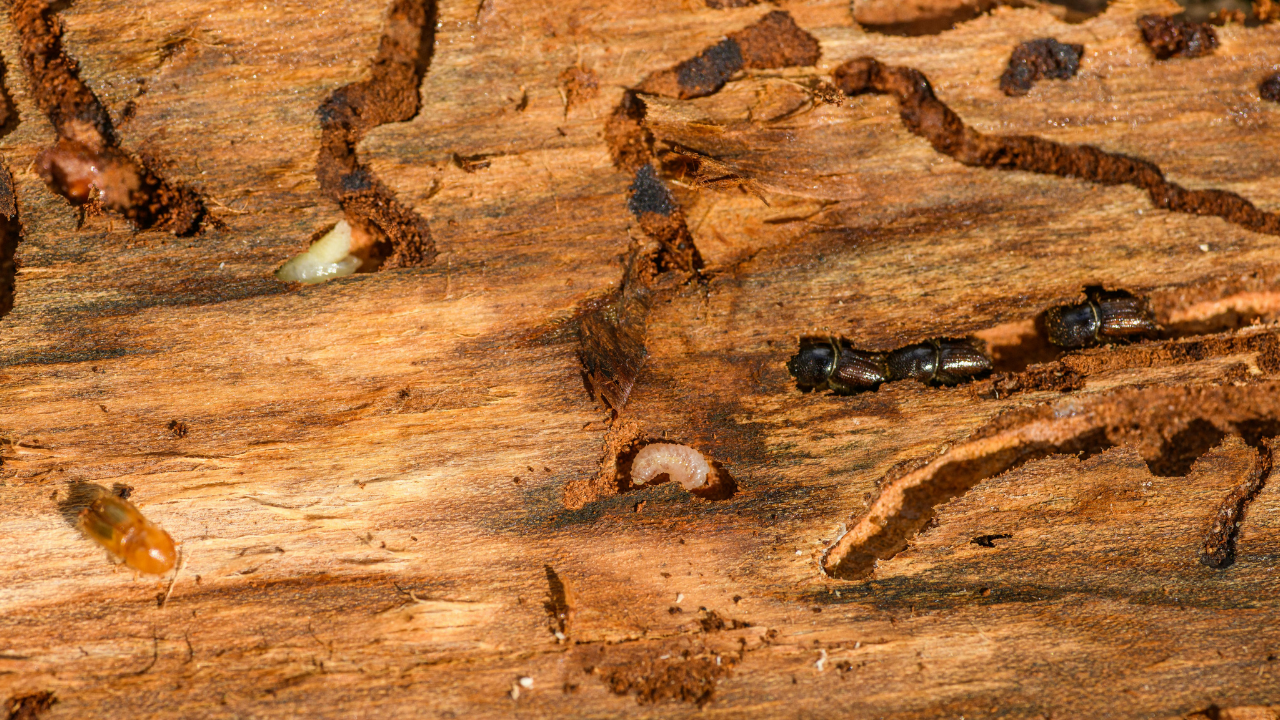
Termites are among the most destructive forces a wooden fence can face. Unlike rot, which degrades wood from the outside in, termites consume wood from the inside out - eating through the cellulose in wood fibers while leaving the outer surface largely intact. This is why a fence board or post can appear sound while being structurally compromised beneath the surface.
Subterranean termites - the most common species in the United States - travel through the soil and enter wooden structures at ground level. Fence posts are particularly vulnerable because they're set directly into the ground, giving termites immediate access at the most structurally critical point.
Other wood-destroying pests that commonly target wooden fences include:
All of these pests share one thing in common - they exploit the same conditions that lead to rot. Moisture, soil contact, and wood that hasn't been properly treated are the factors that attract wood-destroying insects and give them the environment they need to thrive.
Catching termite damage on a fence early dramatically changes your repair options and costs. Here's what to look for during a fence inspection:
Hollow-sounding wood Tap fence posts and rails with a screwdriver handle or mallet. Healthy wood produces a solid thud. Wood that has been hollowed out by termites sounds hollow and papery - like tapping on an empty cardboard box.
Mud tubes Subterranean termites build mud tubes - narrow, pencil-width tunnels made from soil, wood particles, and saliva - to travel between the soil and their food source. Finding mud tubes on fence posts at or near ground level is a reliable indicator of active termite infestation.
Blistered or bubbling paint or stain When termites consume wood just beneath the surface, they can cause the outer layer to blister or bubble as the structural support beneath it disappears. This is easy to miss on weathered or unpainted fences, but visible on painted surfaces.
Small holes and frass Wood-boring beetles and carpenter ants leave small entry and exit holes in the wood surface. Frass - a fine, sawdust-like material - found near the base of fence posts or on horizontal rails is a sign of beetle or ant activity.
Structural weakness Push firmly against fence posts and rails. If they flex, compress, or crumble under moderate pressure, the internal structure has likely been compromised by pest activity. A post or rail that should be rigid shouldn't give at all under hand pressure.
Discarded wings After a termite swarm, reproductive termites shed their wings. Finding small, translucent wings near the base of fence posts - particularly in spring - indicates a termite colony is active nearby.
The United States Environmental Protection Agency recommends annual inspections for termite activity in wooden structures, particularly in regions with warm, humid climates where termite pressure is highest.
.png)
One of the most important things to understand about termite damage on a fence is that what you can see is rarely the full extent of what's there. Termite colonies are large - a mature subterranean termite colony can contain hundreds of thousands to millions of individual insects - and they can be active across a wide area simultaneously.
If you find termite damage on one fence post, there's a reasonable chance that adjacent posts, rails, and boards are also affected. Any wooden structure near the fence - including decking, garden beds with wooden borders, outbuildings, and the home itself - should also be inspected if termite activity is confirmed in the fence.
This is why a professional pest inspection is strongly recommended when termite damage is discovered. A pest professional can assess the full extent of the infestation, identify the colony location, and recommend treatment before you invest in fence repairs that could be re-damaged if the colony isn't addressed first.
Once a pest infestation has been treated, the extent of the structural damage determines your repair approach.
For early-stage termite damage where the hollowing is limited and the post or board still has sufficient structural integrity, epoxy wood consolidants and fillers can restore the damaged area.
Wood hardener penetrates soft, damaged wood fibers and consolidates them. Once cured, an epoxy wood filler can be used to rebuild missing material. This approach works best on above-ground components like rails and boards where the damage is accessible and limited in scope.
It is not a reliable fix for posts with significant below-grade damage - the ongoing moisture and soil contact that contributed to the infestation will continue to degrade the repaired area.
When termite damage is concentrated in specific boards or rails rather than the structural posts, replacing the affected components is a straightforward repair. Damaged boards are removed and replaced with new, properly treated lumber without disturbing the rest of the fence.
Our wooden fence installation team handles board and rail replacement as part of our repair services - ensuring replacement components are matched correctly and installed to minimize future vulnerability.
When termite damage has reached the posts - particularly at and below ground level - post replacement is the appropriate course of action. As we cover in our fence installation guide, the correct approach is to cut the damaged post at ground level, leave the existing footing in place, and set a new post in a fresh hole nearby.
Attempting to treat or fill a termite-damaged post below grade is unlikely to restore structural integrity. Once the internal wood fiber has been consumed, the post can't be meaningfully repaired - it needs to be replaced.
For properties in high termite-pressure areas, this is also a good opportunity to consider transitioning fence posts to non-wood alternatives. Aluminum fence posts are completely immune to termite damage, and chain link fencing eliminates wood from the structural equation entirely.
In cases where termite damage has spread across the majority of a fence - which is not uncommon when an infestation has gone undetected for a long time - full fence replacement is often the more cost-effective decision compared to piecemeal repair of heavily damaged sections.
If you're facing full replacement, it's worth evaluating whether picket fence installation or another fence style with above-ground wood components and non-wood posts might offer better long-term resistance to pest pressure in your specific environment.
This point deserves emphasis: repairing termite damage on a fence before treating the active infestation is a waste of money. New wood installed into an environment with an active termite colony will simply become the next food source.
Always confirm with a licensed pest control professional that the infestation has been fully treated before investing in repairs or replacement. Treatment options for subterranean termites typically include:
The National Pest Management Association maintains a directory of licensed pest control professionals and resources for homeowners dealing with termite infestations.
Prevention is significantly cheaper and less disruptive than dealing with termite damage on a fence after it occurs. Here's how to reduce the risk:
Use properly treated lumber Ground-contact rated pressure-treated lumber contains preservatives that are toxic to termites and other wood-destroying insects. For any fence component that will be in soil contact, this is the minimum standard. Look for lumber rated UC4B or UC4C for below-grade applications.
Apply borate treatments to above-ground wood Borate-based wood preservatives penetrate wood fibers and make them resistant to termite and beetle attack. Applying a borate treatment to fence boards and rails adds a meaningful layer of protection without affecting the wood's appearance.
Eliminate wood-to-soil contact where possible Every point where untreated wood touches soil is a potential termite entry point. Use metal post bases or standoffs to keep horizontal rails and boards from contacting the ground directly.
Remove wood debris near the fence line Old lumber, wood mulch, and decaying plant material near your fence create habitat and food sources that attract termites. Keep the area around your fence clear of organic debris.
Inspect annually Walk your fence line once a year with the inspection checklist above - tap posts, look for mud tubes, check for frass and entry holes. Early detection is the single most effective way to limit the damage a termite infestation can cause.
Maintain proper drainage Moisture attracts both termites and the wood-decaying fungi that weaken wood and make it more vulnerable to pest attack. Good drainage around post bases reduces the conditions that make your fence a target.
.png)
Termite damage on a fence should always involve a professional pest control assessment before any repair work begins. Beyond the pest treatment itself, a fence repair professional can help when:
Contact us for a free fence assessment and we'll help you understand the full extent of the damage and the best path forward.
Termite damage on a fence moves slowly and silently - but it doesn't stop on its own. A fence that looks fine today can be structurally compromised tomorrow, and the longer an infestation goes untreated, the more expensive the repair becomes.
Annual inspections, properly treated materials, and good drainage habits are your best defense. And when damage is found, acting quickly - treating the infestation first, then repairing or replacing what's been damaged - is the approach that protects your property and your investment long-term.
Contact us today for a free quote and let's assess what's going on with your fence before the problem gets any bigger.
How do I know if my fence has termite damage?
Tap posts and rails with a hard object - hollow or papery sounds indicate internal damage. Look for mud tubes at ground level, small holes in the wood surface, frass near the base of posts, and discarded termite wings in spring. If posts or rails flex or crumble under hand pressure, pest damage is likely present.
Can termite-damaged fence posts be repaired?
Minor above-ground damage can sometimes be stabilized with epoxy wood consolidants and fillers. However, posts with significant below-grade termite damage have lost their structural integrity and need to be replaced. Attempting to repair a heavily damaged post underground is unlikely to produce a lasting result.
Do termites damage all types of fences?
Termites target wood specifically - they cannot damage vinyl, aluminum, or chain link fencing. If termite pressure is a persistent concern in your area, transitioning to non-wood fence materials eliminates the risk entirely.
Should I repair my fence before or after termite treatment?
Always treat the infestation first. Installing new wood into an environment with an active termite colony simply gives the colony a new food source. Confirm with a licensed pest professional that the infestation is fully resolved before investing in repairs or replacement.
How quickly can termites damage a fence?
A mature termite colony can cause significant structural damage within one to three years if left untreated. The rate depends on colony size, wood species, moisture levels, and local termite pressure. This is why annual inspections are so important - early detection dramatically limits the damage.
What is the best wood for a termite-resistant fence?
Pressure-treated lumber rated UC4B or UC4C for ground contact offers strong termite resistance for below-grade applications. Naturally resistant species like redwood and cedar perform better than untreated pine or spruce above ground. Borate-treated wood adds additional protection for above-ground fence components.